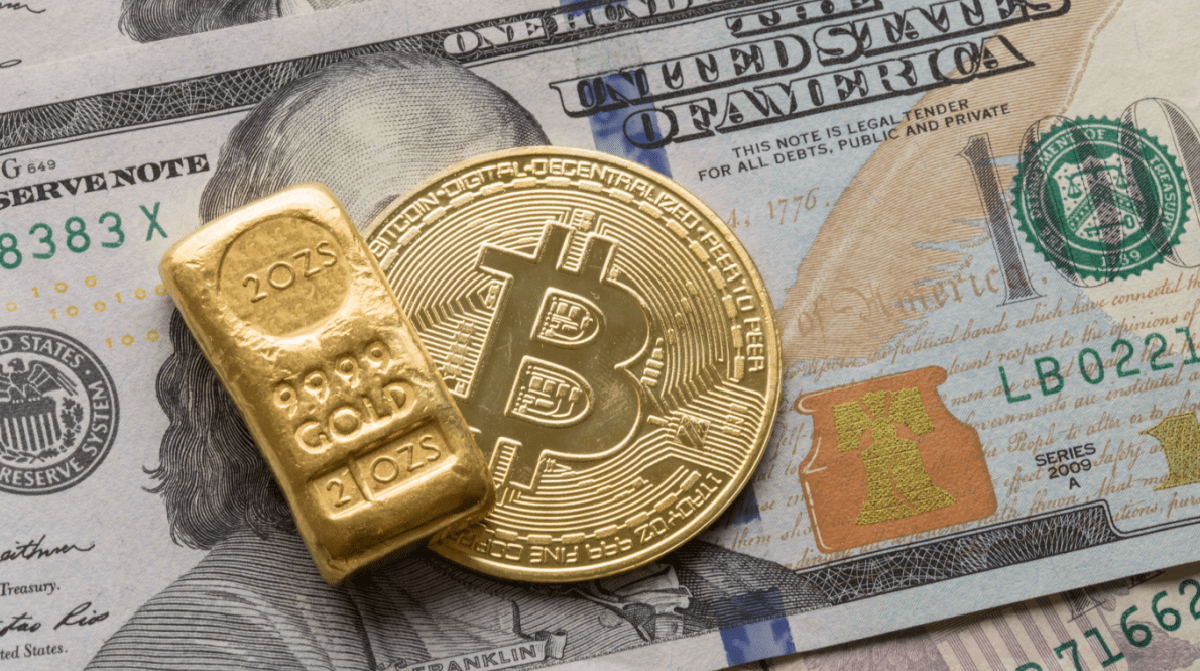
Photo: Yee Hui Lau/Shutterstock
“Bitcoin for Boomers” is a weekly column where Norbert takes his generation on a journey through the world of Bitcoin. With an analog background, he discovers how this digital currency works—from wallets and blockchains to price movements and digital scarcity. In understandable language and with a healthy dose of common sense, he makes this often technical topic tangible for everyone who didn’t grow up with digital technology.
America’s Clever Move #
America played its cards cleverly with the dollar.
After World War II, the Bretton Woods system was established: the dollar was pegged to gold, and other countries pegged their currencies to the dollar at fixed exchange rates. As a result, a large portion of the world’s monetary gold was held in the U.S., notably in Fort Knox.
This worked until 1971, when the Vietnam War demanded so many dollars that Nixon had to abandon the gold peg. Overnight, the dollar, and consequently the other 150 or so currencies, became completely unbacked. All exchange rates lost their anchor and began to float.
To secure the dollar’s status as the world’s reserve currency, America devised a clever plan. In 1973, it struck a deal with Saudi Arabia: oil would be traded exclusively in dollars, in exchange for a massive supply of weapons. The petrodollar was born.
This proved extremely effective, as the world needed increasingly more oil, and therefore more dollars. Today, nearly 80% of all global trade is settled in dollars. Exporting nations also began to hold their dollar surpluses, at least in part, in U.S. Treasury bonds.
The Dollar as a Weapon #
Russia did the same. It parked approximately $350 billion in saved dollars in an account in Belgium. Then, Russia experienced what Venezuela, Iran, and Cuba had before: it ran into trouble with America and Europe, and its dollar assets were frozen.
Furthermore, Russia was cut off from the SWIFT network, making international payments virtually impossible.
The consequences were significant. America (and Europe) were using the dollar as a weapon. It became clear that if your country has a problem with the U.S., you could simply be cut off from the world’s reserve currency. Economically, it’s like being suddenly deprived of oxygen.
Countries like China and India saw what was happening and immediately decided to sell their dollar reserves and convert them into hard assets, such as gold.
The Search for an Alternative: Bitcoin #
Meanwhile, the independent BRICS nations are urgently searching for alternatives to the dollar. For instance, in the form of their own gold-backed BRICS currency. But that is easier said than done.
And this is where Bitcoin comes into play. Because when countries lose faith in the dollar, they start looking for a neutral and borderless reserve asset. An asset that cannot be blocked or manipulated by any single state. And in that scenario, there is really only one candidate left: Bitcoin.