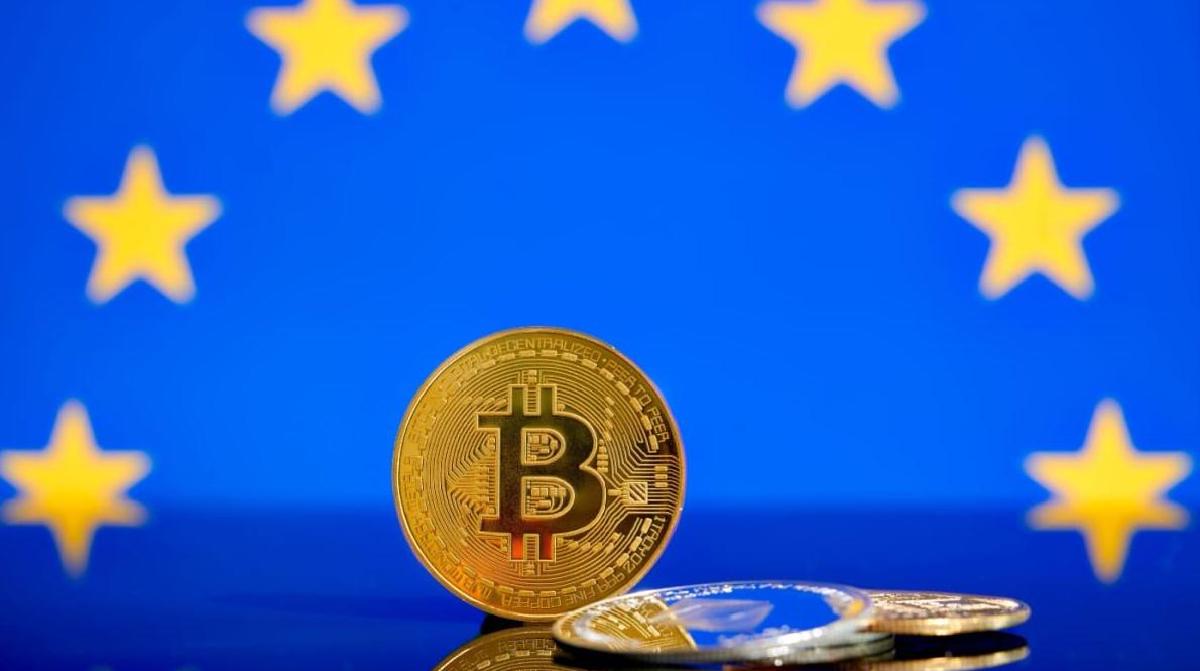

The European Commission believes the EU’s financial markets are too fragmented. On Thursday, Brussels presented a plan to centralize supervision and provide companies with more room to operate across borders.
The Commission wants to grant significantly more power to the European Securities and Markets Authority (ESMA) over crypto companies and trading platforms. This would give ESMA a role comparable to that of the U.S. Securities and Exchange Commission (SEC).
A Single European Supervisor #
Until now, crypto-asset service providers (CASPs) have fallen under the Markets in Crypto-Assets (MiCA) regulations, with licenses issued by national supervisors. This has led to significant differences in the strictness of oversight between countries. The new proposal would grant ESMA direct authority to authorize crypto companies that want to operate throughout the entire EU.
The impact will be felt most strongly by crypto companies. If their activities primarily consist of crypto-assets, they will fall entirely under ESMA’s supervision. Companies with a broader range of financial services, such as banks, will remain partially under national supervision.
Additionally, ESMA will receive extra responsibilities over major trading platforms and market infrastructure. The European Commission has proposed a new label: Pan-European Market Operator. This is intended to provide companies with activities in multiple countries with a single, uniform license.
Fragmentation of Rules #
According to the Commission, the fragmentation of rules is a major obstacle to growth and innovation. It argues that this causes European companies to relocate to the U.S. more often, where the market is managed more centrally. There are also concerns about differences in approach. For instance, the governor of the French central bank previously warned that the current system creates gray areas in the law, allowing companies to evade supervision.
ECB President Christine Lagarde supports the reform. Lagarde has been critical of Bitcoin in recent years, stating in January that Bitcoin will not appear on central bank balance sheets. In her view, stronger central supervision is necessary to better regulate large international crypto companies. Lagarde had already called for a European equivalent of the SEC in 2023.
While France and Germany are positive, countries like Luxembourg and Malta fear that a central supervisor will actually create extra bureaucracy. They argue this could weaken Europe’s competitive edge.