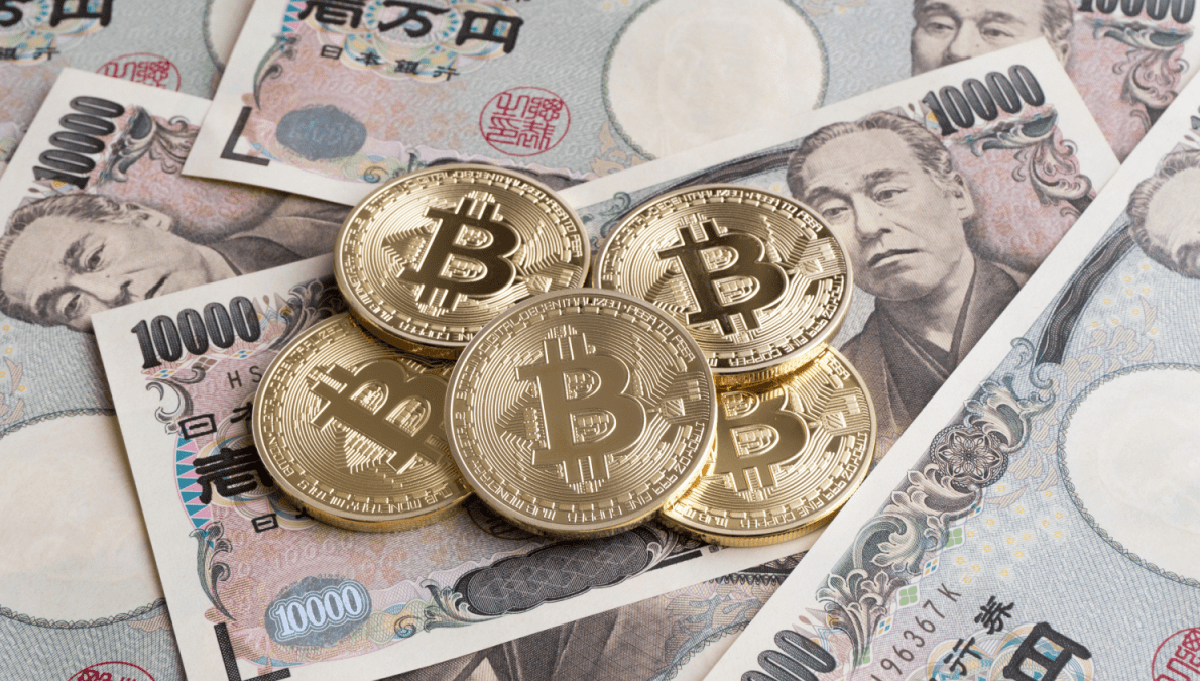
Foto: yuruphoto/Shutterstock
The yield on Japan’s 10-year government bonds has climbed toward 1.9% this week, reaching its highest level since before the financial crisis. This appears to mark the end of an era where Japan’s bond yields were primarily dictated by the central bank and barely moved. For bitcoin, this could have enormous consequences. It’s high time to dive into this.
BREAKING: Japan’s 10Y Government Bond Yield surges to 1.84%, its highest level since April 2008.
This chart is concerning to say the least. pic.twitter.com/fBkMMyBnqy
— The Kobeissi Letter (@KobeissiLetter) December 1, 2025
Interest Rates Move as a Market Instrument Again #
For decades, the Bank of Japan (BoJ) artificially suppressed interest rates through large-scale bond purchases and a strict policy to control the yield curve. The 10-year yield hovered around the zero line for years and was seen as a policy tool, not the result of supply and demand.
Now that this policy is being gradually phased out, the yield is beginning to behave like a “real” market price again. The fact that the entire yield curve, from two to thirty years, is rising shows that investors are demanding higher compensation in a country with persistent inflation and an enormous national debt.
No Smooth Normalization #
However, the rising interest rates do not necessarily mean that Japan is definitively saying goodbye to the era of ultra-low rates. It is more of a test: how far can the central bank withdraw without putting the economy or the financial sector under pressure?
Japan has a long history of deflation and very low growth. Should the global economy fall into a recession, the expectation is that the BoJ will intervene quickly. Higher interest rates would further weaken the economy and make the debt burden more problematic in that scenario. The central bank could then start buying bonds again or push interest rates down to maintain stability.
The difference from previous rescue operations is that the side effects are now clear: disrupted bond markets, pressure on banks, and a weak yen that quickly becomes a risk when import prices rise.
What Does This Mean for Bitcoin? #
The movement in the Japanese bond market also has consequences for risky investments, including bitcoin. Rising interest rates in major economies, especially in Japan, one of the world’s largest creditors, usually lead to less liquidity worldwide. Capital that has been cheaply available for years is becoming scarcer and more expensive.
For the bitcoin price, this often means more volatility. The currency has moved strongly with global liquidity in recent years: if interest rates rise and large investors reduce risk, interest in digital assets also declines.
At the same time, a shift in the economic cycle could lead to the opposite scenario. If Japan or other central banks turn to stimulus policy again during a global cooldown, extra liquidity would be released that could support bitcoin and other market segments.
A Precarious Balance #
The rising Japanese interest rate is therefore less a sign of a confident economy and more a gauge of what the market thinks is sustainable. The country is trying to leave the era of zero interest rates behind it, but the margin to do so calmly is small. A global recession could quickly reverse the movement.
For investors, from bond traders to crypto investors, the message is clear: Japan is at a tipping point, and the outcome could have repercussions worldwide.