The U.S. Commodity Futures Trading Commission (CFTC) has announced that it will make spot bitcoin and ethereum products tradable on registered and regulated futures exchanges. This was disclosed by the commission’s chair, Caroline Pham.
Why is this important for crypto? #
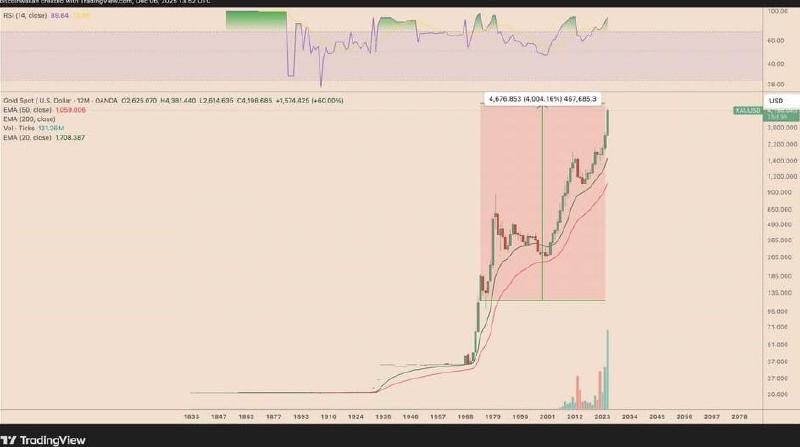
In the 1970s, the CFTC approved gold trading on these exchanges. Since then, the price of gold has risen by 4,000 percent. Both bitcoin and ethereum now have the opportunity to gain exposure on a similar scale with this move by the CFTC.
When gold was introduced on these exchanges, it was a fragmented market. Much of the trading was “over the counter,” but afterward, gold became a recognized investment. Suddenly, large institutions flowed into this market. Transparent price formation created a foundation for long-term capital flows.
This allowed the price of gold to explode over time. The same could happen with bitcoin and ethereum now that they have access to the same markets—although the transparent price formation for these two coins is already much better than it was for gold at the time.
New perspective #
With this move, the CFTC places the two largest cryptocurrencies in the same perspective as gold. The gap filled for American traders consisted of regulated spot leverage, deep liquidity (tradability), and protection at the exchange level. This forced many to trade on Binance until now, as U.S. platforms lagged far behind.
Just as gold evolved from a niche market to a mature asset class, the same can now happen with bitcoin and ethereum.
Large inflow of liquidity #
With the arrival of pension funds, banks, and hedge funds into the bitcoin and ethereum market, a lot of money could flow into these coins. These deep-pocketed companies previously dared not enter this market due to a lack of standard rules, oversight, and proper custody processes.
86 percent of institutional investors already have exposure to crypto or plan to obtain it. With the arrival of bitcoin and ethereum exchange-traded funds, more than $100 billion has already been invested in these two coins.
A study by Coinbase, together with EY-Parthenon, showed that more than 80 percent of respondents planned to invest more money in crypto. The answers indicate that most investors want to allocate more than 5 percent to crypto, for example, for a pension fund.
Historically, listings on regulated trading platforms have been a prelude to much larger trading volumes, such as oil futures in 1983, which yielded 33 times as many contracts within a year and nearly 700 times as many by the late 1980s.
Another aspect could be that the enormous increase in trading of bitcoin and ethereum on such regulated platforms sharply reduces volatility, as large buy and sell orders can be easily absorbed by the massive volumes.